Once again, the sun was out for a day, and what better than doing some last-minute gardening. And when the sun is out so are all the currently present seasonal bugs.
One of the bugs present in the UK gardens is Green shieldbug, which is apparently a common sight but truth be told, this is the first time this year that we've encountered it.
There is one generation per year, with slim chances to have two. The nymphs feed on many deciduous trees and shrubs, and can be found from June to October. Later nymphs are often darker than those found earlier in the season. The one I'm presenting to you today and of which the photographs I took are from the final instar nymph and is still brighter than the ones to follow.
In the UK, the Green Shieldbug is unique in having a plain green appearance with no other markings other than the dark straw-coloured wing tips terminating the hard wing cases. Its plain green appearance is remarkably effective camouflage as they roam over a wide range of plants, including my raspberry bush, where I took the photos shown to you below. What is interesting is how their body segment lines and edges blend very effectively with plant leaf veins.
Note: Newly emerged adults will have clear transparent wing tips as oppose to darker wings in other stages of adulthood.
The development cycle from egg to adult can be completed in about six weeks, and all hopes high by UK's weather permitting, there might, yes just might be two generations to mature in a year. Adults are about a centimetre long and love to gather last of the summer's sun rays. Green shield bug will mostly be found consuming a runner bean, tomato and of course in my case, raspberry. Just to let you know, if you have any ornamental plants, well, the chances are that you'll find them there too, eating away those plants' seed heads.
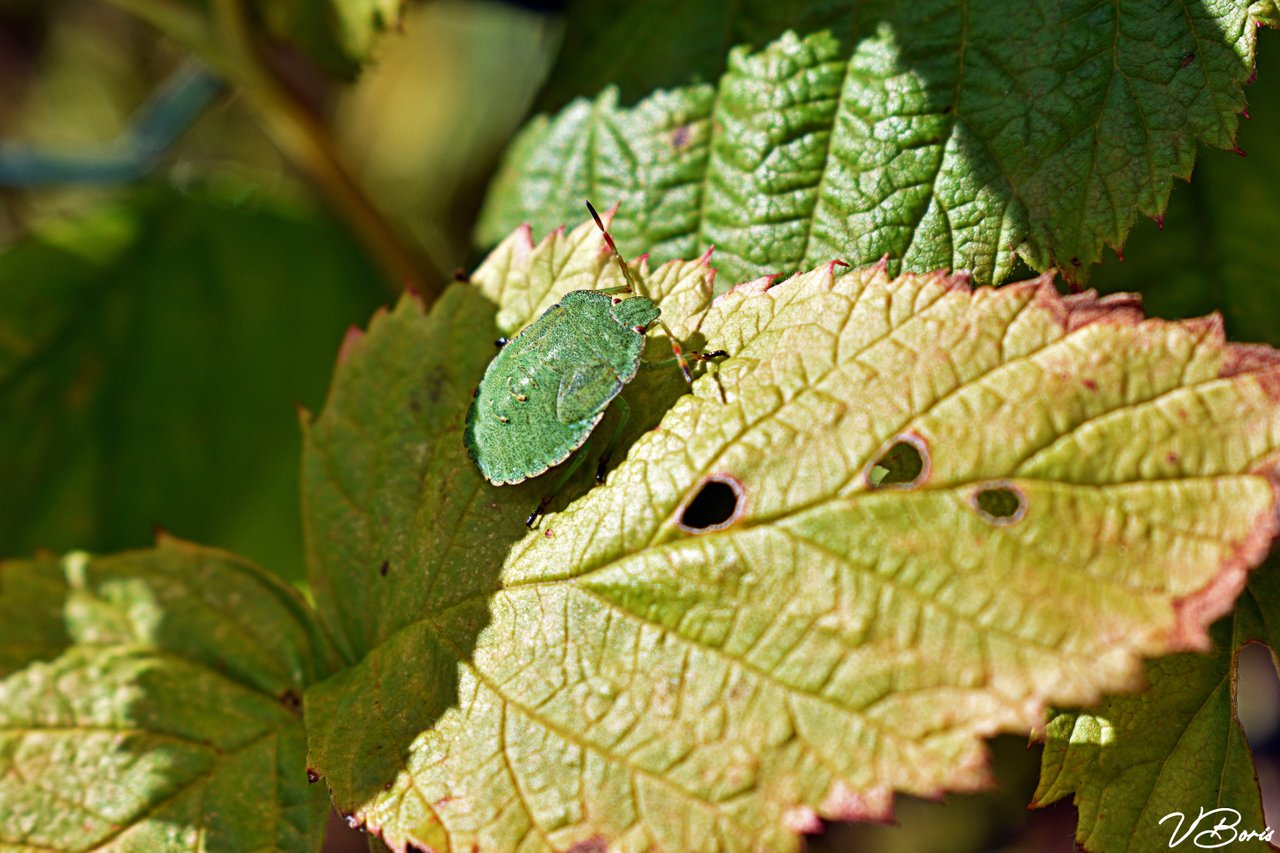

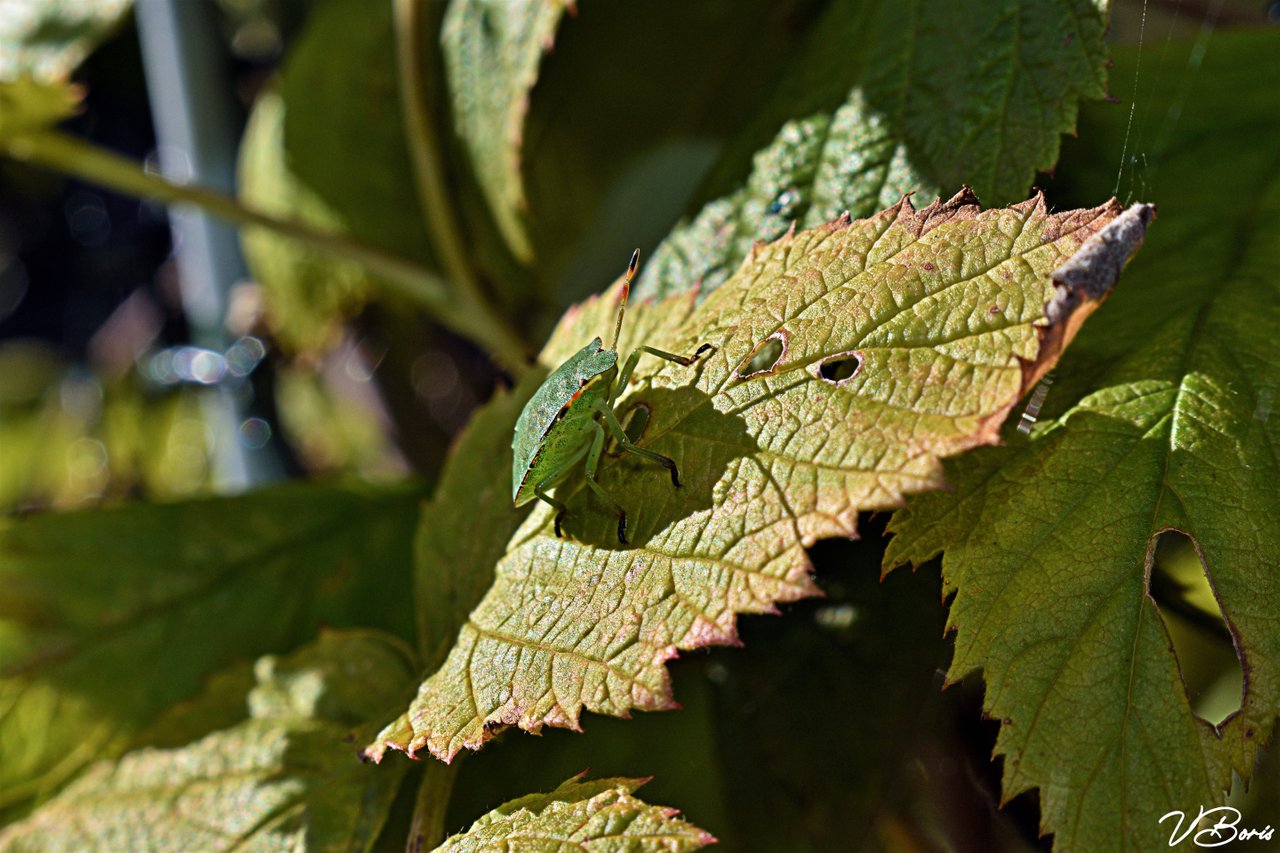

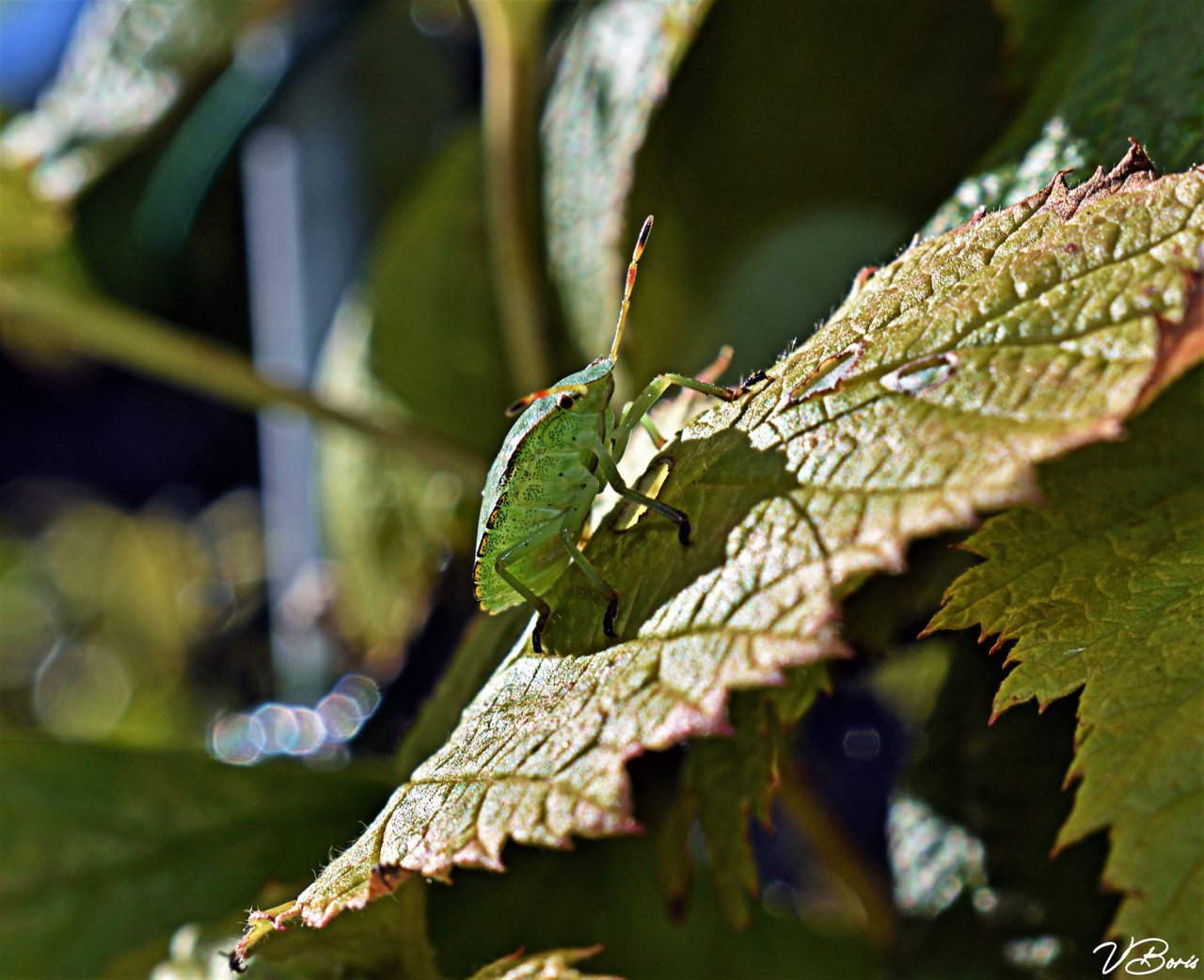

Having a chance to discover wildlife more up close now has truly been and still is an incredible new way to broaden my horizon!
An Interesting fact: Green Shieldbug’s alternative name is Green Stink Bug. I know what you're thinking, and you are 100% correct. Yes, that name refers to the smell that it leaves as a trail over fruit and vegetation. If it's present in large numbers, this can taint and spoil a crop. The insects also produce this smell if handled or disturbed, so better just leave it alone if it's not causing any extensive harm to any of your flowers or produce.
All of the photos included in this article are mine.
Thanks for stopping by and take care.