I was walking along the other day when I saw a beetle on its back with its legs up in the air. All of its legs were going full on and flailing around in every which way. I wondered to myself, “Who the heck designed such an unpractical body? How on earth did the beetle wind up on its back?”
I walked past the beetle thinking that it probably would eventually find a way to turn over. It seemed like if it just tried to open its wings and fly it would be alright. I wasn’t sure if that would occur to the beetle in its present predicament though.
Maybe opening its shell while resting on its back would be harmful to its wings. I don’t know that much about it so I decided to turn around and check if it was still helpless and watch what would happen. I could see it hadn’t made any progress and was still on its back.
I watched for awhile and took a couple pictures.
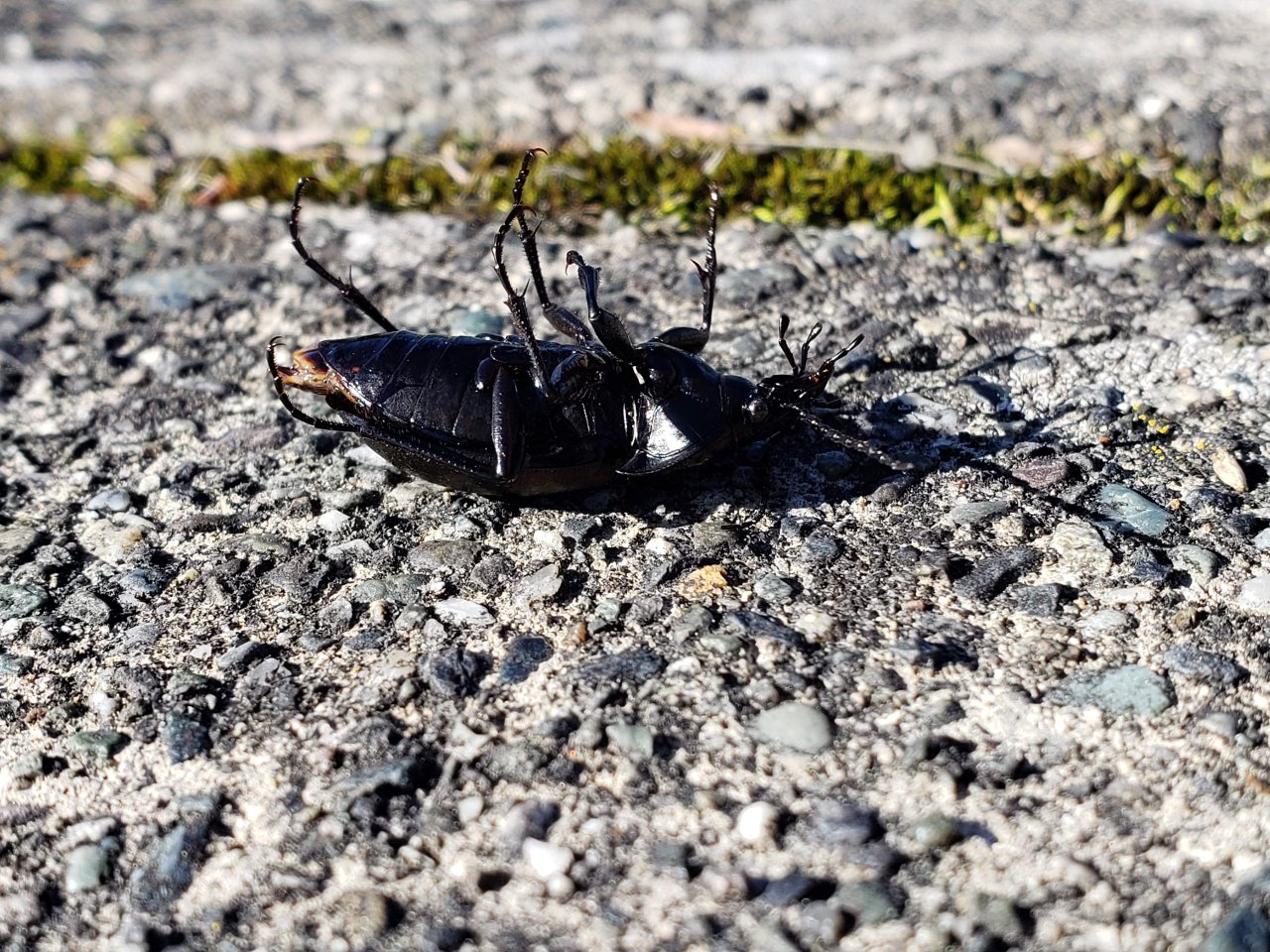
A beetle on its back – click for viewing full screen
Sitting on the hot sidewalk cooking in the sunlight can’t be all that pleasant.
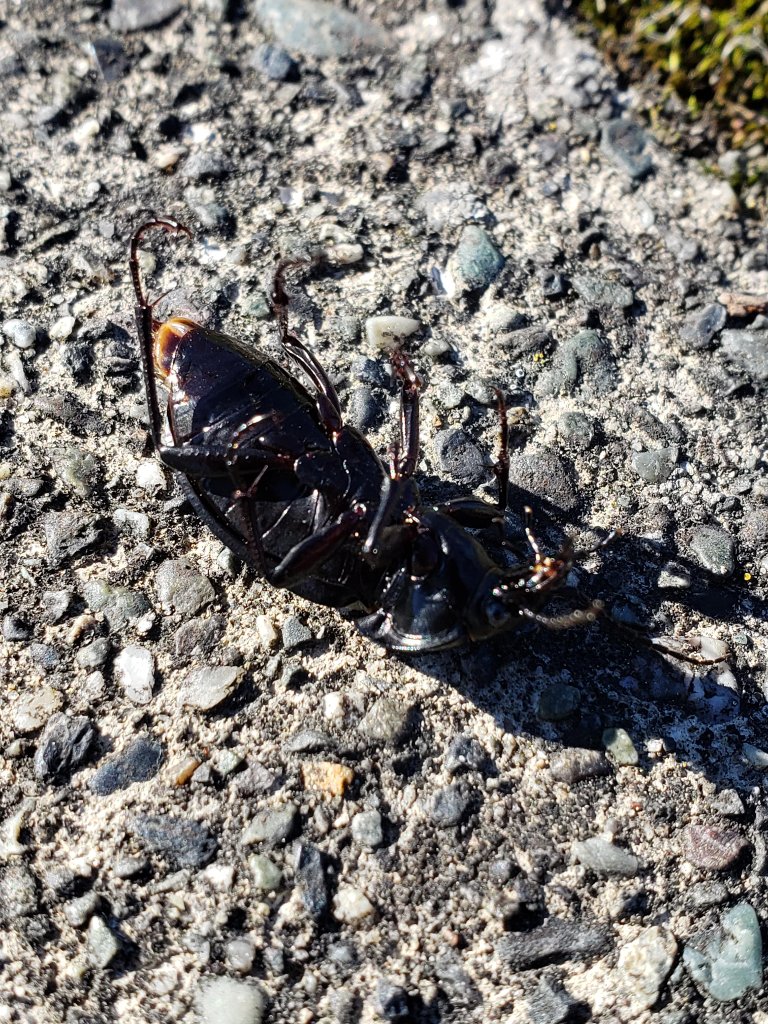
A beetle on its back – click for viewing full screen
I figured I better turn it over before Dog-oh stepped on it. The beetle seemed a bit unsteady for a bit then wandered off as beetles do. I saw a really pretty purple and black color on the shell. I’ve heard some beetles are used to create dye to stain cloth, maybe this type could be used for that.
My guess is that the beetle might have glanced off of a car or something and ended up landing on its back but I’m not sure if this one can fly or not.
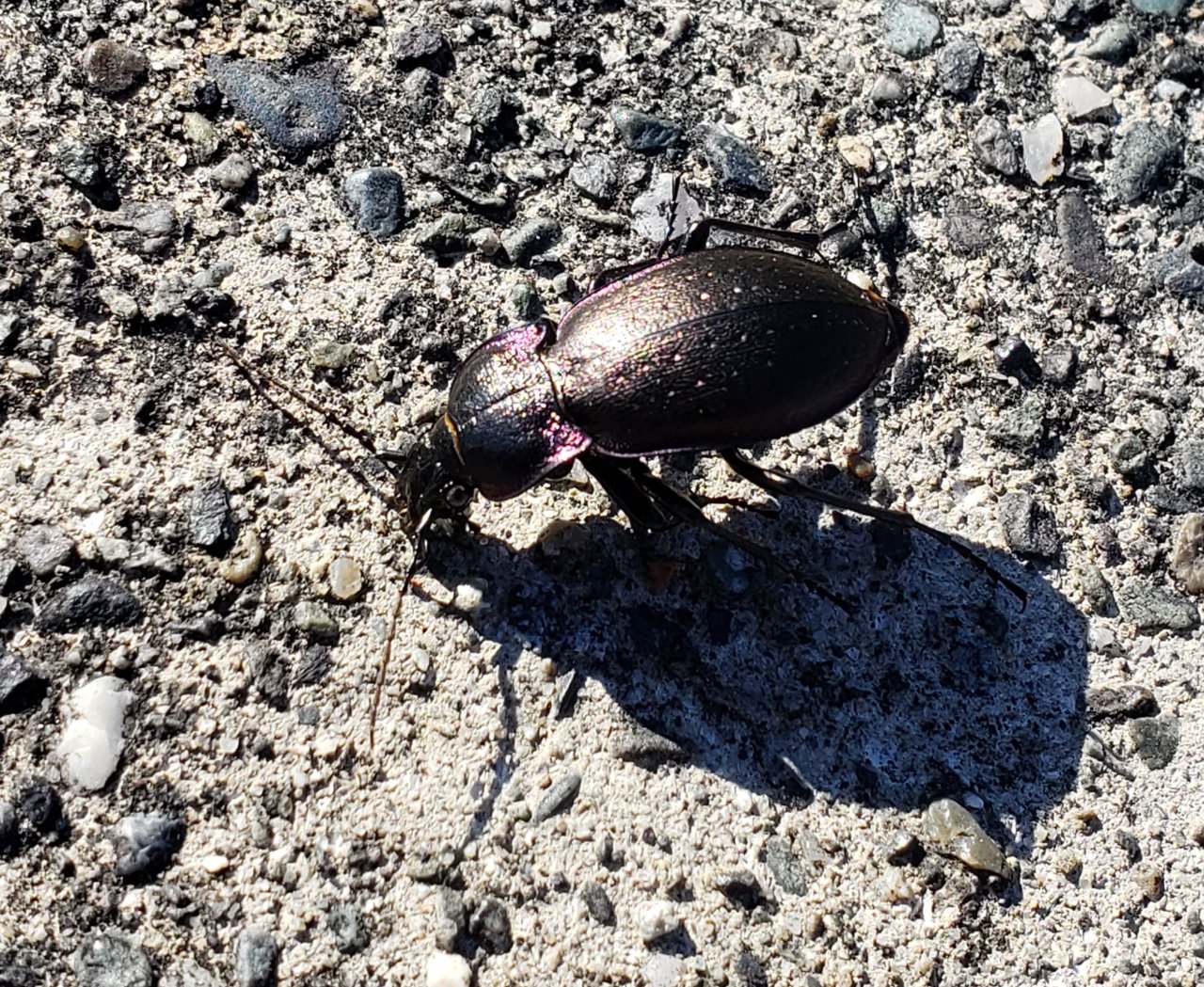
A beetle walking away – click for viewing full screen
It really seemed strange to me that the beetle could not find a way to turn over. When you think about it though, having an almost perfectly flat surface like the sidewalk would not have been a natural occurrence until more modern times.
Lots of things are changing rapidly and lots of bugs are becoming more scarce. I remember much more grasshoppers, crickets and flying insects around when I was younger.
Many scientists agree that these major changes are a big issue. There are many suggestions for how we can improve things. One simple thing I thought about was to improve the construction of our roads and sidewalks. If they were made more porous it would help many things and maybe even help beetles turn over by themselves.
In a way, I think that having a concern for the smallest things will be of big benefit for everyone.
Possible Benefits of Porous Sidewalks
I’m not an expert in this area but just some ideas on what changing sidewalk construction from primarily concrete, to some other porous material could do. Concrete takes a lot of energy to make and we are starting to run out of raw materials like sand to use in the construction of it.
- Reduce CO2 in the air – Natural weathering and plant growth will eventually reduce the CO2 but it would normally take thousands of years. If materials were used in sidewalk that helped this natural process things might go faster.
- Improve ground water conditions – Ground water is important for tree growth and irrigation. It is not easily increased and has been pumped down in many areas.
- Improved flood control – Desert areas and smooth rock surfaces like concrete streets and sidewalks are really prone to flash flooding. Our streets and sidewalks should mimic the conditions in rainforest's for better flood control.
Just a few ideas that I came up with. Like anything else I’m sure there are things I’m not considering. Different sidewalk construction might be more costly and require more maintenance. Access maybe more difficult for people with disabilities. The decision about it is out of the control of most people.
I do think that we are going to see many improvements and changes like this over the next decade. Many of our current buildings and cities are being destroyed by changing weather conditions, rising sea levels, hurricanes, and earthquakes and it would be a good thing to try to plan around the best way to reconstruct them imho.
Thanks for reading! I always value your support and comments. The pictures were taken by me with my Galaxy S9+. Text and graphics copyright 10/14/2018 lightsplasher & litesplasher.
 ](https://steemit.com/qurator/@qurator/qurator-3-0-update-post-guidelines-or-registration-details-or-tier-changes)