
Introduction
Many years passed by and we can now clearly see and notice the drastic and immense improvement of the world in terms of technology. The world quotes the term "High-tech" which literally emphasizes that we commend to its development. We just know that as technology continues and continue to improve, little by little our gadgets are getting smaller and smaller to the extent that it can now be so easy for us to carry those- or in other words portable. It's clear and evident to our naked eyes and can even be tangible to our very own hands. In electronics, these devices which are lightweight and can be carried somewhere with ease are referred to as "Portable Electronic Devices (PED)". Behind every PED's system are embedded an electronic devices and circuitry which is responsible for the execution of instructions we want our gadgets to function for and these devices are called Microprocessor and/or Microcontroller. I use the conjunctions and/or to emphasize that not all PED has both, some may have the two but in most cases, just a microprocessor.
This blog offers you an insight about the distinction of a microprocessor and a microcontroller. Everything that will be detailed later in this blog is just my personal understanding about how these two devices function since these topics are also covered in my Electronics subject as an Electronics Engineering student and I am basing the below details on my notes of this subject about this topic. I hope you guys have a well time reading this blog.
Microprocessor
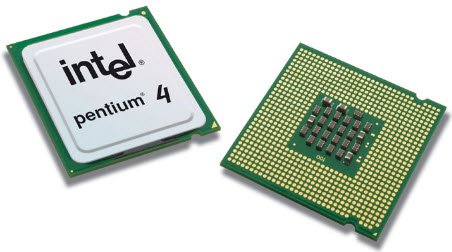
A microprocessor (often abbreviated as µP or MPU) is a simple computer (computer- meaning an electronic device which stores and processes data; not a computer hardware or a desktop) contained more or less in one integrated circuit (IC). It integrates a number of useful functions into a single IC package. These devices require other peripheral components such as a memory unit so as to function.
Microprocessor Block Diagram

Three Basic Activities of an MPU
- Performs mathematical and other sophisticated functions and operations
- Moves data from one memory location to another
- Makes decision and jump to a new set of instructions based on the decision
Three Basic Units/Elements of an MPU
Those three basic activities are happening inside an MPU, it also has an associated elements tasked to perform each basic activity and even more.
- Arithmetic Logic Unit (ALU)
- Control Unit (CU)
- Register (Temporary Storage)
Now let's examine these three elements:
- Arithmetic Logic Unit (ALU)
- as the name implies, this unit performs all numerical computations/operations such as addition, subtraction, multiplication and division and so on and logical evaluations/operations such as AND, OR, NOT, NOR, XOR, XNOR and so on for the processor
- this is one of the basic units of a microprocessor, without this processing of data is impossible.
- Control Unit
- this unit is responsible for the decoding and the monitoring of the execution of instructions
- this also directs the sequence of operation for the processing of data
- Registers
- acts primarily as a temporary storage of data during the execution/runtime of the program
- Different types of registers are shown in the table below
Peripheral Devices
- Memory
- used to store the information (data & instructions) as in the binary form
- this unit consist of a microprocessor computer system consist of two types of memories:
a. Read-Only Memory (ROM)
b. Random Access Memory (RAM)
- System Bus/ Bus
- physical link between various computer components
- this unit is basically classified into three groups:
a. Control Bus
b. Data Bus
c. Address Bus
MPU Advantage and Disadvantage
Advantage
- high speed
- high accuracy and reliabilty
- ease of data movement between memory locations
- used to perform multitask operations
- only requires limited current and low voltages
Disadvantage
- Highly sensitive to thermal and electric variations
- Do not have internal memory, Input/Output ports
- No timers which interrupts inside the MPU
- Can make a system expensive
- Needs proper interfacing components for functioning
Microcontroller

A microcontroller (often abbreviated as µC or MCU). It is a true computer on a single chip. this device is a microprocessor with peripherals in one electronic component. It is designed specifically for use in embedded systems that typically include an integrated CPU, memory (a small amount of RAM, ROM, or both), and other peripherals on the same chip.
Microcontroller Block Diagram

Comparison between Microprocessor and Microcontroller
A. Comparison According to Building Feature

B. Comparison According to Characteristics
Your Electronic aspirant,
IVAN
