Una abrazo desde esta zona verde, aquí se alojan todos los colores, aromas y sabores; los criterios y cada elemento de nuestro entorno porque así es este espacio múltiple.
Hoy les traigo una curiosidad, aunque parezca sencilla, no sé ustedes, pero yo no recuerdo haber visto una planta de anís pericón

Las plantas me buscan, sinceramente ellas vienen a mi, no en el sentido literal, sino a través de quienes saben sobre mi pasión por las plantas. Justamente la tarde en espera de nochebuena, mientras hacíamos un asado, mi hermano me dice mira, anís.
A èl se le da bien el cultivo del romero, la albahaca, ruda y otras plantas muy difíciles de gozar. Y honestamente tomé una hijita y la olí y rato después busqué la planta de anís en internet para confirmar. No es el anís de china, ni el japonés, no es el anisón. Es Anís Pericón.
El anís pericón, conocido como hierbanís, es una planta aromática nativa de las regiones montañosas de México y Centroamérica, donde ha sido venerada desde la época prehispánica tanto por sus propiedades medicinales como rituales. Busqué sobre ella para contarles.

Esta planta herbácea se caracteriza por alcanzar entre 30 y 75 centímetros de altura, presentando tallos fuertes y rectos y ramificados cubiertos por hojas alargadas, delgadas y de un color verde brillante, que al ser frotadas desprenden un intenso y dulce aroma anisado, similar al del estragón. El estragón lo conocí en Francia como especie, posee un olor y sabor muy fuertes, perfumado.
Las pequeñas flores del Anis pericón, que aparecen a finales del verano y durante el otoño, son de un llamativo color amarillo dorado, se agrupan en especies de ramos en los extremos de los tallos y poseen una notable resistencia, siendo muy atractivas para polinizadores; sin embargo, a diferencia del anís estrellado, no produce un fruto especiado, ya que su parte más utilizada son precisamente las hojas y las flores.

En cuanto a sus propiedades, el anís pericón es ampliamente valorado en la herbolaria tradicional por ser un potente digestivo, aliviando cólicos, flatulencias y dispepsias, además de actuar como un suave antiespasmódico. Se le atribuyen también propiedades diaforéticas, regula el flujo menstrual, empleándose en infusiones para calmar la ansiedad y el insomnio.

Su aceite esencial, rico en estragol, es el principal responsable de su aroma y de muchas de sus acciones terapéuticas, aunque debe usarse con precaución. Culturalmente, además de su uso medicinal, se emplea en la cocina como condimento para aromatizar guisos, salsas y bebidas, y en México es tradicionalmente utilizado para adornar altares durante las celebraciones del Día de Muertos, fusionando así su utilidad práctica con un profundo simbolismo cultural.
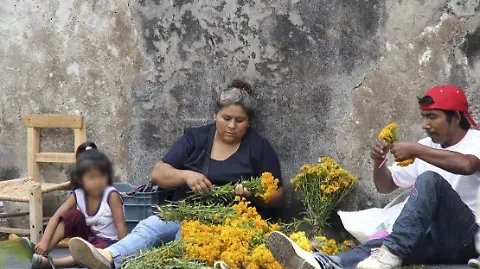
Preparativos para el Dia de los Muertos
El anís es una de las plantas que más usamos en el hogar, junto a la canela es un aroma recurrente y preferida. Esta variante no tiene estrellas, pero es anís con sus propiedades muy particulares.

Recuerda que puedes seguir esta comunidad #Greenzone, y delegar a su usuario @hive-164923, HP o un % de las recompensas para su crecimiento. También puedes unirte a su trail de curación: https://hive.vote/

Gracias por visitar mi blog. Soy crítica de arte, investigadora social y amante de la cocina. Te invito a conocer más de mí, de mi país y de mis letras. Texto y fotos de mi propiedad.

A Scent of Home
A hug from this green zone, a place that houses all colors, aromas, and flavors; the sensibilities and every element of our surroundings because that's just how this multifaceted space is.
Today I bring you a curiosity. It might seem simple, but I don't know about you, I don't remember ever seeing a Pericón anise plant.
Plants seek me out, honestly they come to me—not in the literal sense, but through people who know about my passion for plants. Just on the afternoon before Christmas Eve, while we were having a barbecue, my brother says to me, look, anise.
He's good at growing rosemary, basil, rue, and other plants that are quite difficult to enjoy. And honestly, I took a little shoot and smelled it, and a while later I looked up the anise plant online to confirm. It's not Chinese star anise, nor Japanese anise, it's not anisette. It's Pericón Anise.
Pericón anise, known as "hierbanís," is an aromatic plant native to the mountainous regions of Mexico and Central America, where it has been revered since pre-Hispanic times for both its medicinal and ritual properties. I researched it to tell you about it.
This herbaceous plant is characterized by reaching between 30 and 75 centimeters in height, with strong, straight, and branched stems covered with elongated, thin, bright green leaves that, when rubbed, release an intense and sweet anise-like aroma, similar to tarragon. I first encountered tarragon in France as a spice; it has a very strong, perfumed smell and taste.
The small flowers of Pericón anise, which appear in late summer and during autumn, are a striking golden yellow color. They cluster in bouquet-like arrangements at the ends of the stems and are notably resilient, being very attractive to pollinators. However, unlike star anise, it does not produce a spicy fruit, as its most used parts are precisely the leaves and flowers.
Regarding its properties, Pericón anise is highly valued in traditional herbalism for being a powerful digestive aid, relieving colic, flatulence, and dyspepsia, in addition to acting as a mild antispasmodic. It is also attributed diaphoretic properties, regulates menstrual flow, and is used in infusions to calm anxiety and insomnia.
Its essential oil, rich in estragole, is primarily responsible for its aroma and many of its therapeutic actions, although it should be used with caution. Culturally, besides its medicinal use, it is employed in cooking as a seasoning to flavor stews, sauces, and beverages. In Mexico, it is traditionally used to adorn altars during Day of the Dead celebrations, thus fusing its practical utility with deep cultural symbolism.
Preparations for the Day of the Dead
Anise is one of the plants we use most at home. Along with cinnamon, it's a recurring and favorite scent. This variant doesn't have stars, but it is anise with its very particular properties.
Remember you can follow this community #Greenzone, and delegate to its user @hive-164923, HP or a % of rewards for its growth. You can also join its curation trail: https://hive.vote/
Thank you for visiting my blog. I am an art critic, social researcher, and cooking enthusiast. I invite you to learn more about me, my country, and my writing. Text and photos are my property, duly credited.