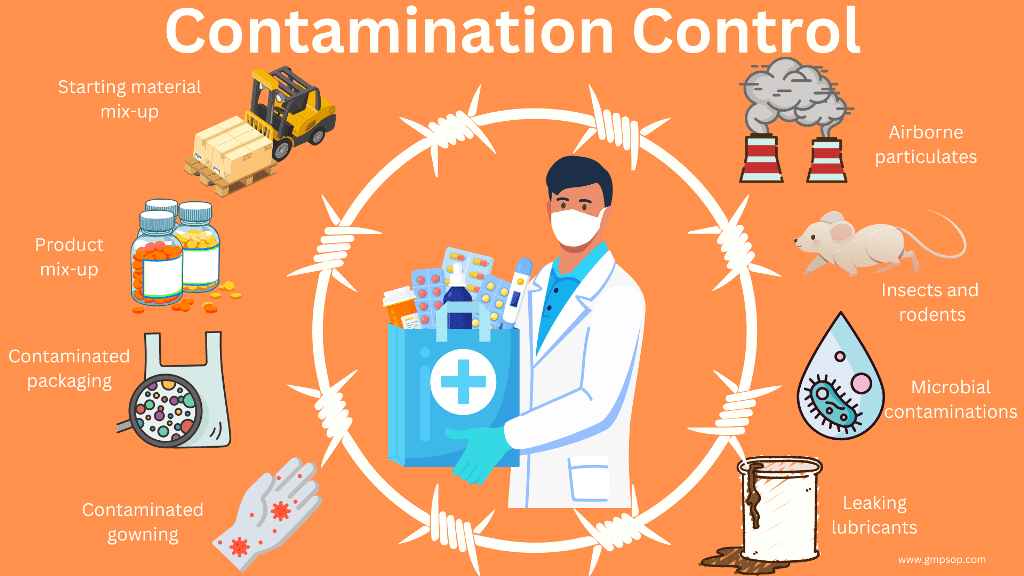
 [Source](https://www.gmpsop.com/basic-overview-of-contamination-control-in-gmp-facility/)
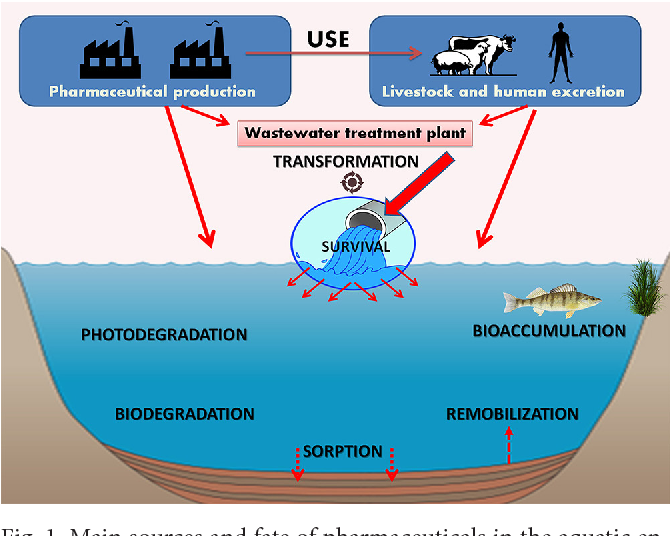
Pharmaceutical contamination refers to the presence of pharmaceuticals and their metabolites in the environment, such as rivers, lakes and aquifers.
This can occur due to different factors, such as excessive use of pharmaceuticals by humans and animals, improper disposal of expired or unused medicines, as well as insufficient disposal of pharmaceutical waste by industry.
Pharmaceutical pollution can have negative effects on aquatic ecosystems and wildlife.
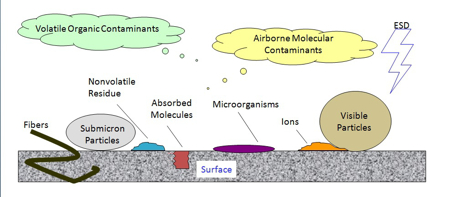 [Source](https://cleanroomtechnology.com/news/article_page/Contamination_and_risk_management/97762)
For example, studies have shown that certain drugs can affect the behaviour and reproduction of fish, as well as have detrimental effects on other aquatic organisms.
In addition, there are concerns about the potential impact of pharmaceutical contamination on human health, as traces of medicines have been detected in drinking water supplies in some areas.
 [Source](https://www.semanticscholar.org/paper/Pharmaceutical-pollution-of-aquatic-environment%3A-an-Rzymski-Drewek/a22a2255f8f4aaba69808cd75bea2496f82d8626)
Proper management of pharmaceutical waste and the promotion of sustainable practices in the pharmaceutical industry are important measures to address this problem.
However, the reality is that pharmaceutical contamination remains a complex and persistent challenge.