2021 was the year of the rise of new smart contract layer one L1 blockchains. A lot of them Ethereum compatible blockchains, or EVM compatible (Ethereum Virtual Machine), but some with a tech of their own like Solana and Terra.
There is now at least ten blockchains that have established them self in 2021.
Let’s take a look at them and compare them with some key metrics.
We will be looking into the following blockchains:
- Ethereum
- BSC
- Solana
- Terra
- Avalanche
- Polygon
- Fantom
The data that we will be looking at:
- Number of Addresses
- Active Addresses
- Daily Transactions
- Fees
- Contracts
The period that we will be looking is the latest data from April 2022.
The data for the chains will be extracted from their blockexplorers or some other data providers.
Number Of Addresses
One of the key metrics for crypto projects is the number of wallets.
Here is the chart.
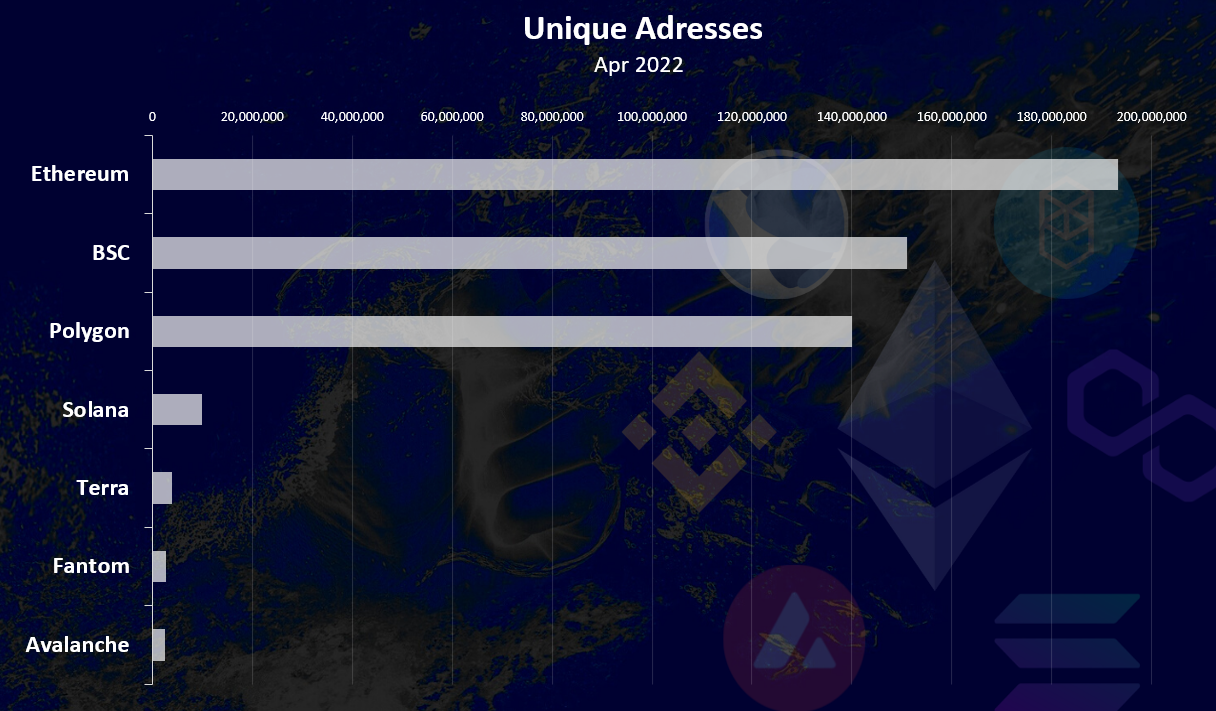
Ethereum is on the first spot here with 193M wallets. Closing on 200M now.
The Binance Smart Chain BSC is on the second spot with 150M wallets. Polygon is third with 140M wallets. All the other blockchains have less then 10M wallets. Avalanche is on the bottom spot here.
Note that the Solana data is approximate.
Active Addresses
What’s more interesting in times like this is how many wallets are transacting. How many of those addresses are actually active?
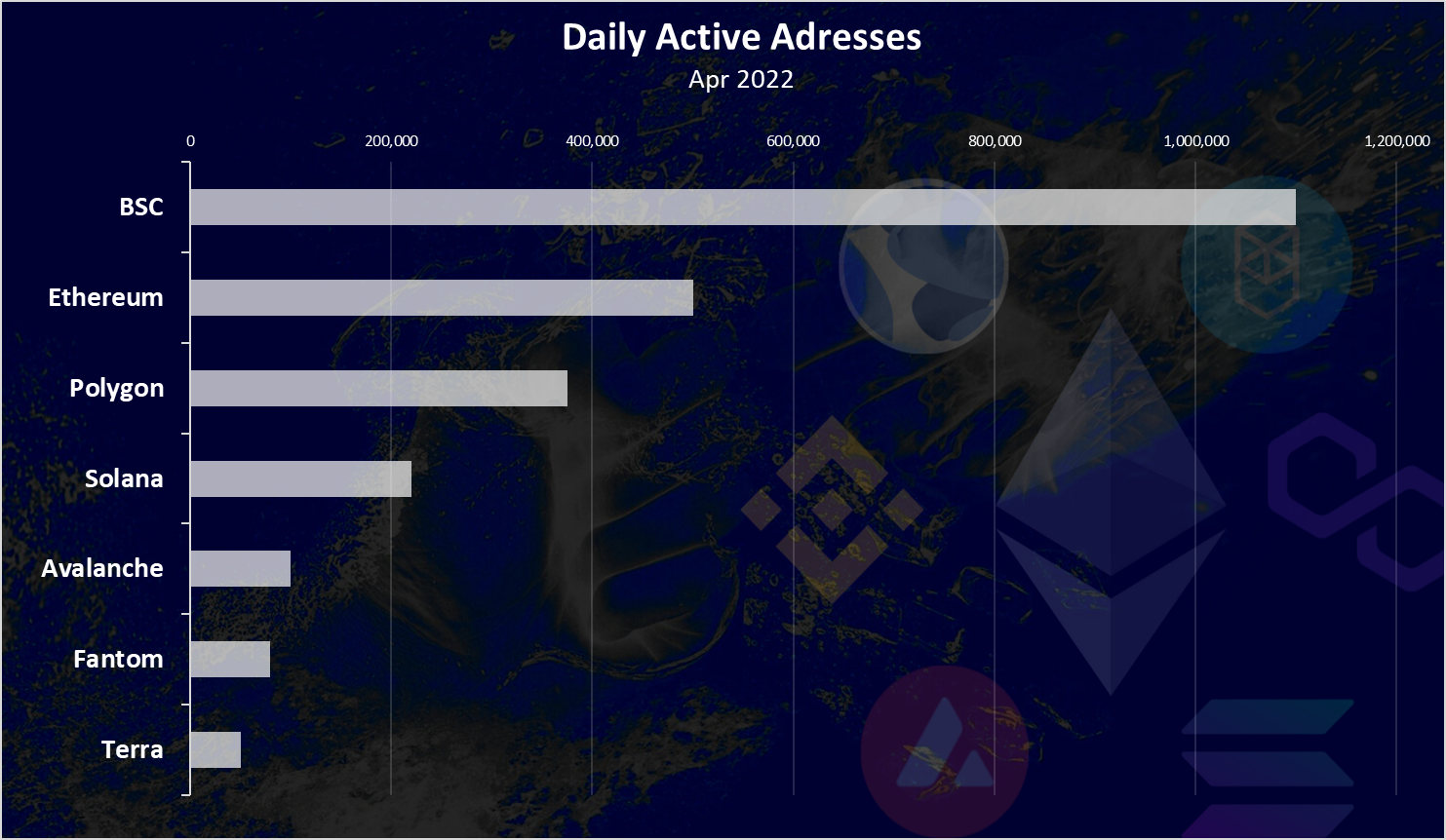
BSC is on the top here with more then 1M active daily wallets.
Ethereum comes second with around 500k DAUs in the last period, followed by Polygon. Terra is last according to this ranking.
Daily Transactions
The activity on the networks is mostly represented by the number of daily transactions. Here is the chart.
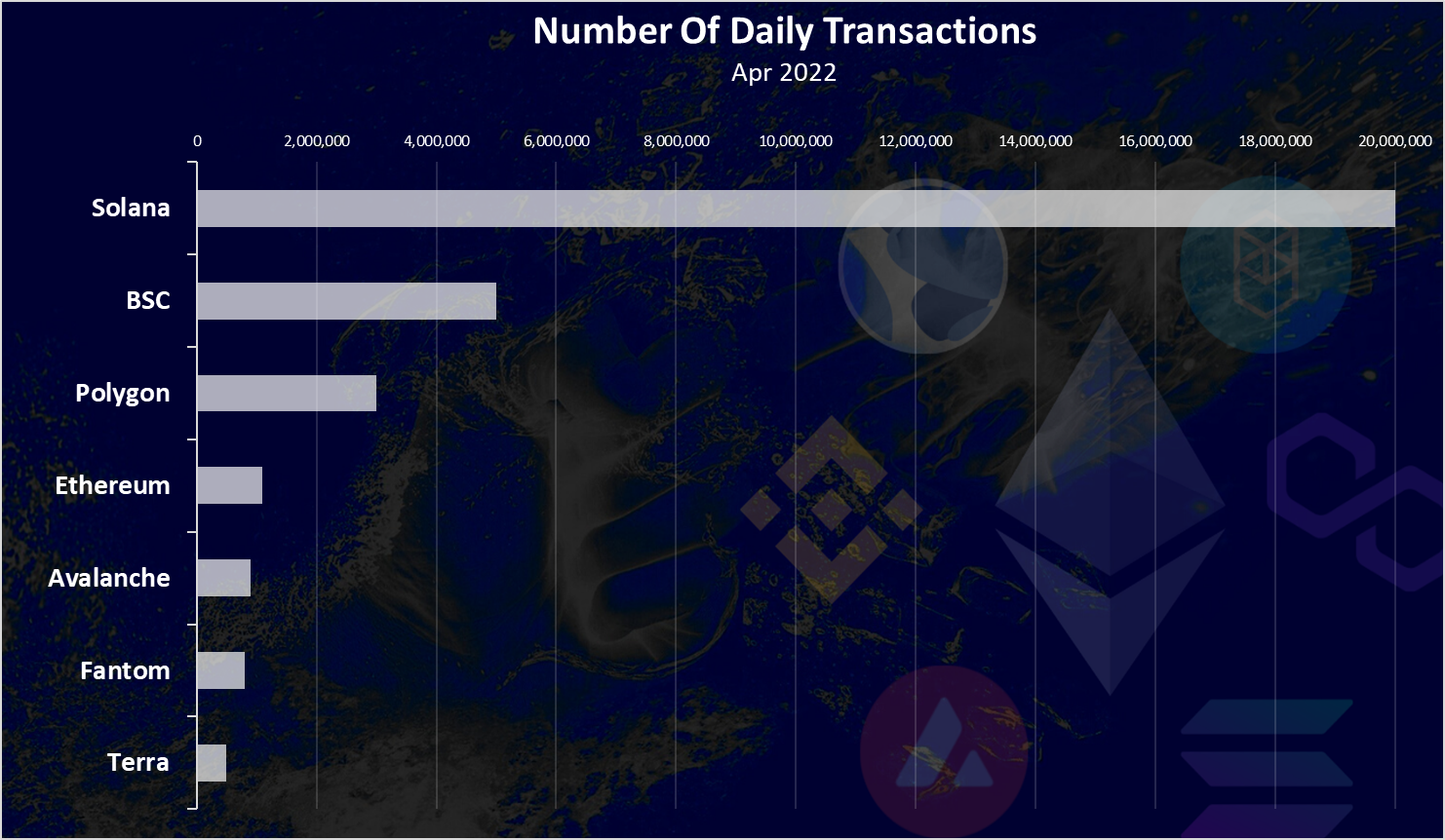
Solana is holding the number one spot by far here. That is what the blockchain is know for. Its speed.
BSC is on the second spot with around 5M transactions, followed by Polygon. Terra is last here as well.
Fees
Fees are quite the unpopular topic and one of the main reasons for the new EVM chains, as users are trying to find a way to escape ETH high fees.
Here is the chart.
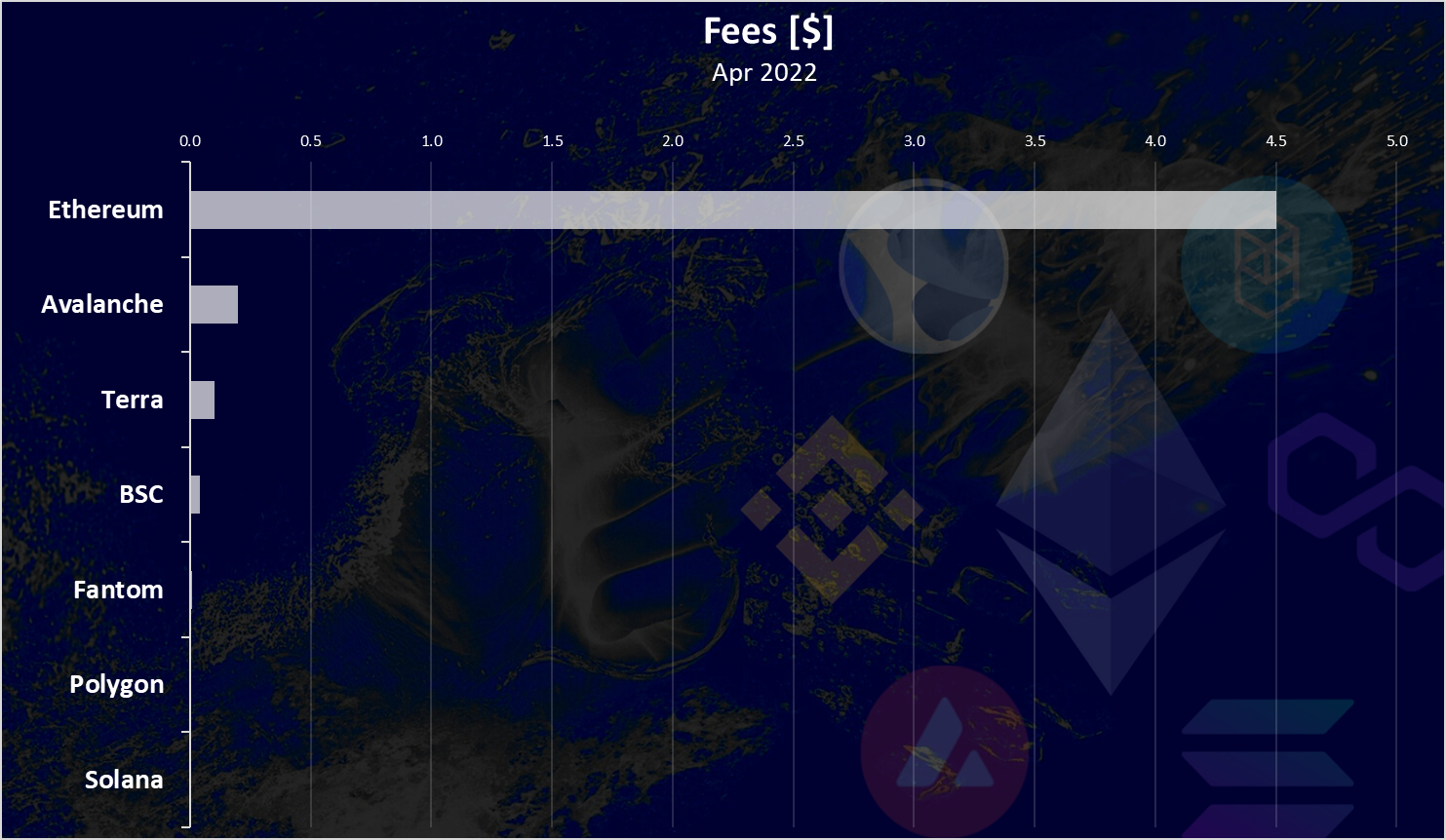
The fees here are in dollars.
Ethereum is by far the most expensive chain in terms of fees. The average fees according to cointool are around 4.5$. These are actually quite low fees for Ethereum. The fees have been as high as in the few hundreds dollars. It also depends on a lot of what type of transaction is made, is it a simple transfer of funds, or maybe swapping that are usually more expensive. Avaalnche is on the second spot with 0.2$ followed by Terra.
Polygon and Solana are the cheapest blockchains in terms of fees.
Contracts
These three are smart contract platforms so here is the chart for verified contracts per day.
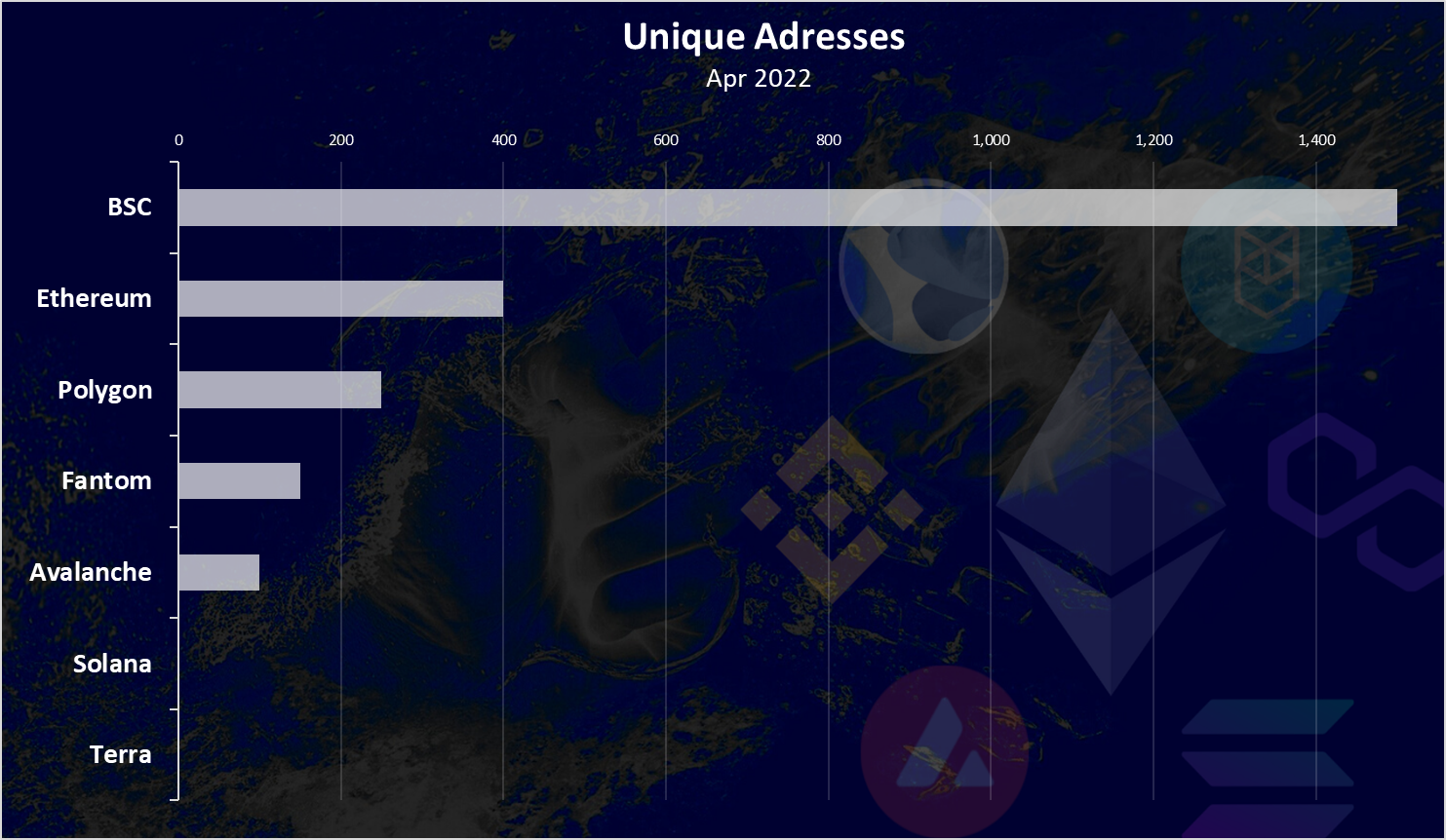
BSC is on the top here with 1500 contracts per day. Ethereum is on the second spot with 400, followed by Polygon.
There is no data for Solana and Terra to compare against.
When we summarize the above, we get this:
- Wallets – Ethereum
- Active Wallets – BSC
- Transactions – Solana
- Cheapest Fees – Solana
- Contracts – BSC
This is the current situation, and it has been changing from time to time.
In terms of marketcap Ethereum is still the king here, but obviously there is a lot of competition now, from EVM chains but from other smart contract chains like Solana and Terra.
All the best
@dalz
Posted Using LeoFinance Beta