When delving into the world of data structures and algorithms in Java, one concept that repeatedly surfaces is that of "nodes." Nodes are fundamental building blocks in many data structures, from linked lists to trees.
In this article, we'll explore the concept of nodes in Java, their significance, and their role in various data structures. We'll cover their basic structure, common use cases, and the importance of nodes in efficient data manipulation.
https://www.youtube.com/watch?v=PEdFSWJm0TA
Node Anatomy in Java
Before we dive into the various data structures where nodes are commonly used, let's first understand the basic anatomy of a node in Java.
A node is a self-referential data structure, meaning it contains both data and a reference (or link) to another node.
In Java, nodes are typically implemented as classes, and their structure can be broken down into two primary components:
Data: The data within a node represents the actual information stored in that node. This data can be of any type, such as integers, strings, objects, or custom-defined data structures.
For instance, in a linked list, the data in a node could be an integer, while in a binary tree, it might represent a more complex object.
Reference (or Link): The reference is the connection between nodes. It points to another node in the data structure, creating the necessary linkage between them.
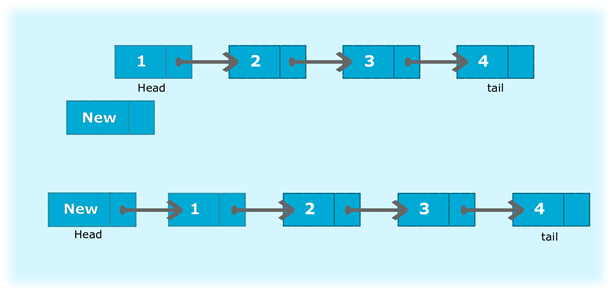
Inserting a node
This reference can be a pointer or a reference variable, depending on the type of data structure being used.
In the case of a singly linked list, each node typically has a reference pointing to the next node in the list. In contrast, in a binary tree, each node can have multiple references to its child nodes.
Role of Nodes in Common Data Structures
Now that we've grasped the fundamental structure of nodes, let's explore their significance in various data structures:
Linked Lists
Nodes are central to the implementation of linked lists, which come in different variations such as singly linked lists, doubly linked lists, and circular linked lists.
In a singly linked list, each node contains data and a reference to the next node. This structure allows for efficient insertion and deletion of elements in the list, making it a popular choice for dynamic data structures.
Trees
Nodes play a crucial role in tree structures, including binary trees, binary search trees, and AVL trees. In a binary tree, each node has a reference to its left and right child nodes.
In a binary search tree, nodes are organized such that values in the left subtree are less than the node's value, while values in the right subtree are greater.
This hierarchical structure enables efficient searching, insertion, and deletion of data.
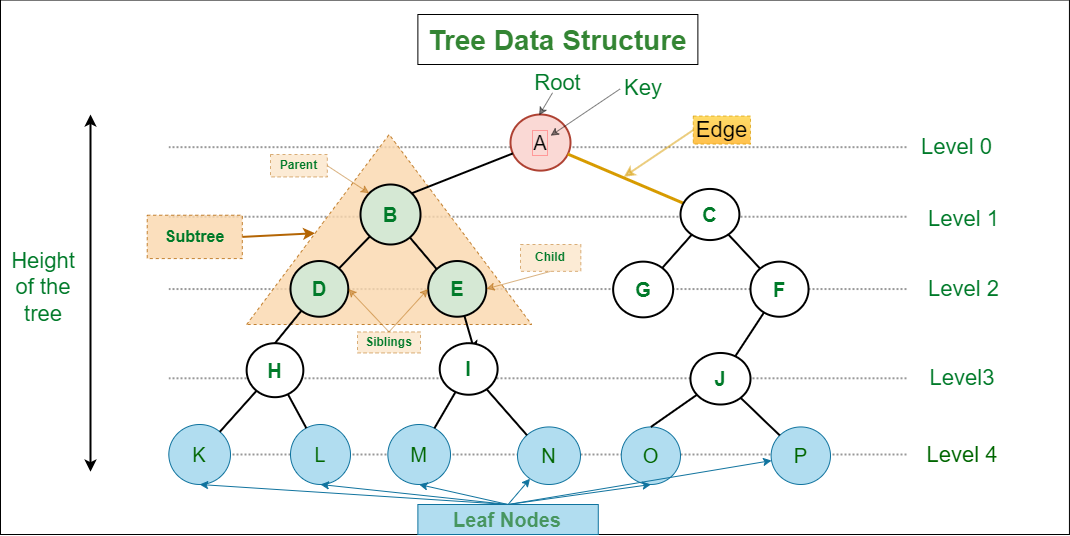
Source: GeekforGeeks
In balanced trees like AVL trees, nodes are organized to maintain balance, ensuring optimal performance for operations.
Graphs
Graphs, a versatile data structure for modeling complex relationships, heavily rely on nodes and edges. In a graph, nodes represent entities, and edges denote connections or relationships between nodes.
These nodes can contain additional information about the entities they represent.
Nodes and edges combine to form a network of interconnected elements, making graphs suitable for various applications, from social networks to network routing algorithms.
Efficiency and Manipulation of Data
The importance of nodes in data structures extends beyond their mere presence.
Their efficient use allows for optimized data manipulation operations. Here are a few reasons why nodes are essential for efficient data processing:
Constant Time Insertions and Deletions
In linked lists, nodes permit constant-time insertions and deletions at the beginning of the list. This is possible because each node has a reference to the next node.
By simply updating the reference of the current first node, you can add or remove elements without traversing the entire list.

Source: Stack Overflow
This efficiency is a key advantage of linked lists when compared to array-based data structures.
Tree Balancing and Searching
In tree structures, such as binary search trees, nodes play a pivotal role in ensuring efficient searching and balancing.
The hierarchical arrangement of nodes allows for logarithmic time complexity when searching for an element, making it faster than linear search operations on arrays.
In balanced trees like AVL trees, nodes' organization is vital in maintaining tree balance, leading to predictable performance.
Graph Traversals
In graph data structures, nodes are at the heart of traversal algorithms, such as depth-first search (DFS) and breadth-first search (BFS).
These algorithms navigate the graph by moving from node to node, exploring connections and relationships. Nodes provide the structure and reference points necessary for these algorithms to operate efficiently.
Posted using Honouree