Your exhaust pipe isn't just an outlet; it's a diagnostic window into your engine's health.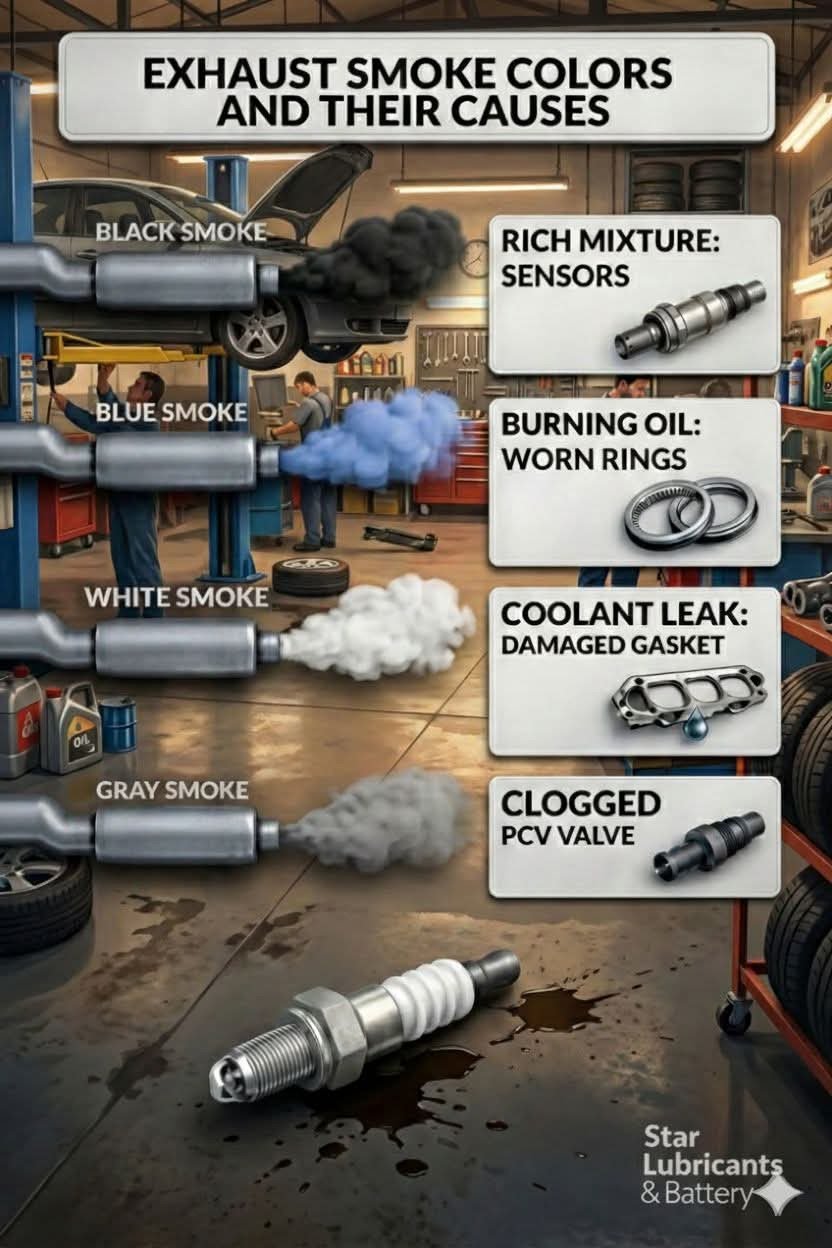
When something is wrong internally, the color of the smoke is often the first visible sign. Let's understand these smoke signals:
Black smoke (rich fuel mixture):
This indicates that the engine is burning too much fuel and too little air. This "rich mixture" is usually caused by bad sensors, a clogged air filter, or leaking fuel injectors.
Blue smoke (oil burning):
If you see blue smoke, it means your engine is burning oil. This is a clear sign of internal friction or wear, such as worn piston rings or worn valve seals, which are allowing oil into the combustion chamber.
White Smoke (Coolant Leak):
Thick white smoke (not just a light mist on a cold morning) indicates a coolant leak. This is often the result of a bad head gasket, which if ignored can cause the engine to overheat and completely destroy itself.
Gray Smoke (PCV System):
Gray smoke can be a bit confusing, but it often indicates a clogged PCV valve (Positive Crankcase Ventilation). A faulty PCV system builds up pressure and can lead to oil leaks and poor performance.
Don't ignore smoke!
Timely diagnosis can save you from the expensive expense of a complete engine rebuild.