My artistic practice engages with symbolic, cultural and anthropological readings of the body. The use of hybridity and anthropomorphism becomes a tool for negotiating the dichotomy between the civilized self and the instinctive, untamed self. This forms the basis for narratives that attempt to deconstruct history and identity. There is an engagement with the skins surface as a boundary, receptive to patterning, mapping and fragmenting. Through this fracturing of imagery, I further investigate notions of displacement and belonging, to evoke a sense of unease and disconnectedness. This is of particular relevance to my own cultural history.
Currently, I am interrogating the body more as a concept of space, working with landscape and exploring land itself as a body. The deconstructed elements that previously mapped out the surface of the body, almost topographically, now extend beyond it, to form extensive spatial platforms in themselves. In approaching the South African landscape from a collection of viewpoints and contexts, and largely from memory, I am defining and undefining, perpetually deconstructing and redefining this body and its context. The new rendering of these spaces allows for a more fluid and abstract working platform.

OSCILLUM | 2012
A series of multi layered silkscreens

CUTANEOUS | 2012
Linocut with Chine-colle

NHM REFRACTIONS | 2013
Monotype with Drypoint


UNHOLY ORNAMENT | 2013
Linocut with Monotype


DECORUS IN GRYPHUS | 2014
Etching, with monotype, variably editioned.

HADRON COLLIDER & PHOTON MAN | 2014
Reduction linocut, drypoint and monotype (prints).
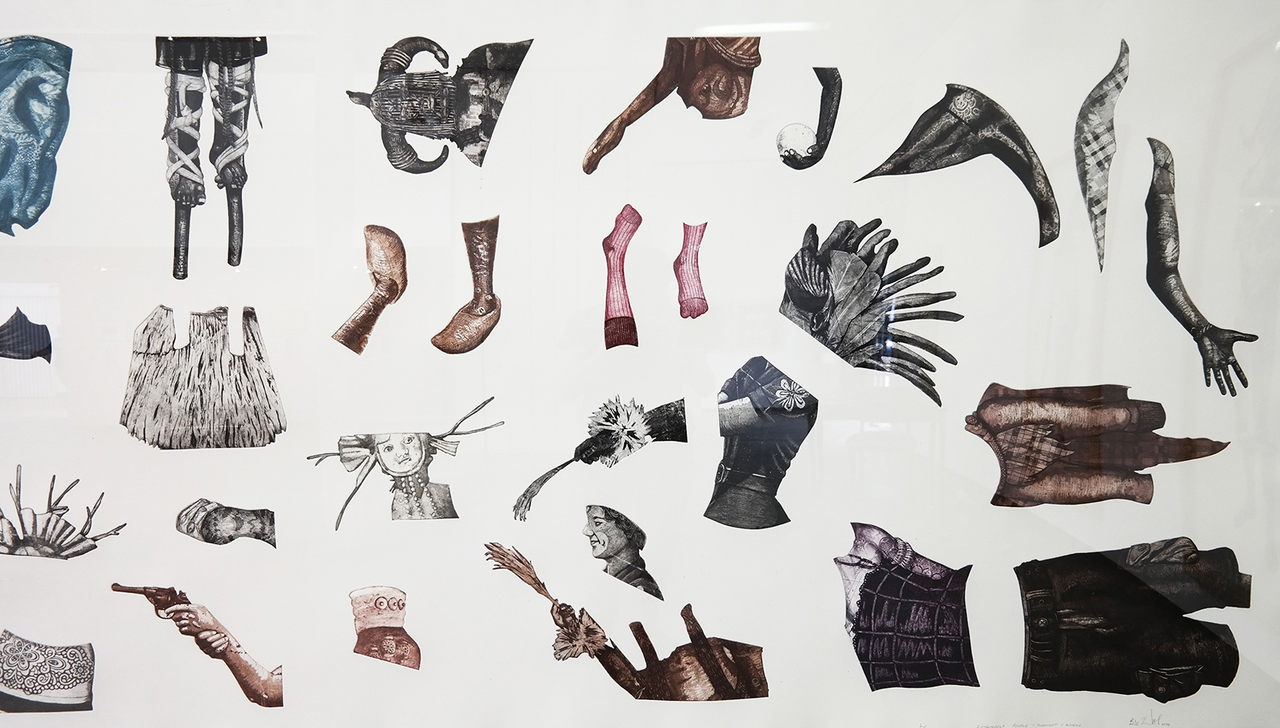

VESTIGE | 2014

MOD VENUS | 2014-2015

STRANGE DREAM | 2015

LAST LIGHT | 2015-2016

EQUILUX 1 | 2016
Artist Statement and Images Sourced From:
http://www.bevandewet.co.za
My Thoughts:
In my post from yesterday I mentioned how two artists working on the same subject matter can have such different approaches and imagery, today I'd like to touch on the subject again, but from a different angle.
In my post above showing the works of South African artist Bevan de Wet, I've posted individual images from each series of his works or exhibitions. Please visit his web site after reading this post to see what I'm trying to explain.
I get approached so often by young artists for advise on how to put together a well executed body of work for an exhibition. An exhibition takes planning in order to deliver a body of work that has continuity and flow.
If you look at Bevan's exhibitions it's amazing to see that flow and how he does it. He can take one image and alter it by adding, subtracting, changing colour or even layering different print mediums.
In the case of his Vestige exhibition in 2014 he created various shaped etching plates and by putting these etching plates together in different composites he creates endless new image combinations.
Generally artists are concerned with the creation of art, but when you start exhibiting you need to take many things into consideration. One of those things is how your works relate to each other. It is not the same as viewing individual works on a social media site. The viewer (your buyers) need to have a flow, places for the eye to rest on and then slowly get drawn to the next work. The job of the curator is to ensure this happens. The curator treats each wall the same way an artist treats a canvas. We look at composition of the wall, creating balance and flow. This however can be made near impossible if the artist has not taken this into consideration. So when planning an exhibition consider the following: the space you're exhibiting in, the sizes and formats of your work, colour (how one work can tie into the next), subject and a focal work. I can go on for ever, but these are just a few things. Think, consider and plan.
Please take the time to visit Bevan's site and look at how successful exhibitions are curated and think about what makes them successful.
Bevan de Wet Contact Details:
http://www.bevandewet.co.za
[email protected]
(+2784) 750 9988