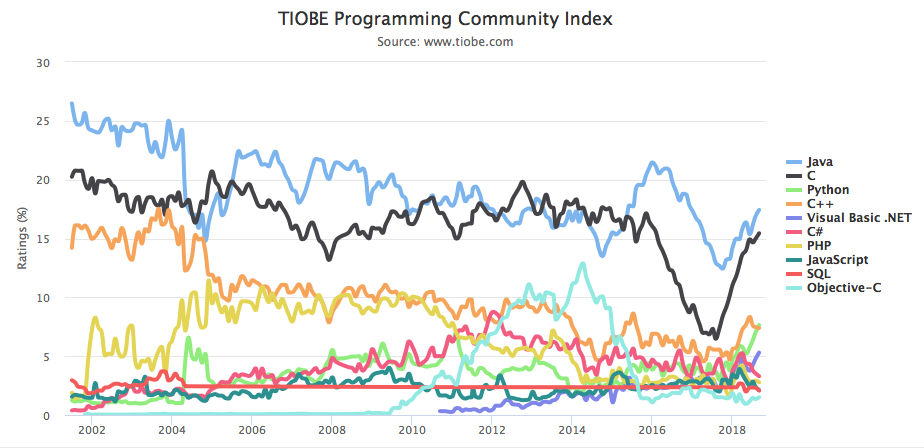
Python scored C in 2017 in terms of the popularity of programming languages, the second-largest percentage jump. Most of the current data scientists are trained at the universities in Python. And, if I interpret the statistics on the distribution of programming languages, rightly, they also tend to stick to it ... my guess, therefore, is that Python, R medium to long term, except in very rarely used statistical methods and legacy Applications, can and will replace.
A meaningful continuation connection question could be: under which conditions Data Scientists prefer Python and under which R? R has specific strengths in its original environment of origin, especially in the field of rarely used statistical methods. Python, however, is the more universal and integrative computer language that can cover not only all applications of R completely, but also most requirements beyond that, even by means of the simple integration of R-scripts in Python scripts - such as large web Applications, administrative batch jobs, and productive projects around BIG DATA, ML, DL, and AI.